Why Control Systems Verification Might Be the Most Important Skill You’re Not Learning
You’ve seen it before.
The airflows are correct.
The water flows are correct.
The TAB report looks great.
And yet… the building still isn’t working.
The temperature swings.
The VAV boxes hunt.
The fans ramp up and down like they’re training for a marathon.
Someone from the owner’s team eventually says the phrase everyone dreads:
“But the system passed, right?”
Yes. The system passed.
But the system still isn’t performing.
What’s usually missing?
Control systems verification.
The Hidden Side of System Performance
Most HVAC professionals understand the mechanical side of systems. Air handlers, coils, fans, pumps, dampers. Those are the visible parts.
But the brains of the system are the controls.
And if the controls are wrong, nothing else matters.
- A perfectly balanced VAV system can still fail if the control sequence is incorrect.
- A hydronic system can meet every flow requirement and still oscillate if control valves are unstable.
- A static pressure sensor in the wrong location can cause an entire building to behave unpredictably.
Controls determine how systems respond, how they stabilize, and how they perform over time.
That’s why verifying control systems is a critical component of Total System Balancing and commissioning.
The Skill Gap in the Industry
Here’s the reality most people won’t say out loud:
Many TAB professionals don’t receive formal training in control verification.
Many commissioning providers understand sequences but struggle to verify the system behavior in the field.
And many projects assume “the controls contractor handled it.”
That assumption is where problems begin.
The ability to verify control operation in real HVAC systems is becoming one of the most valuable technical skills in the industry.
Enter the Control Systems Verification Course
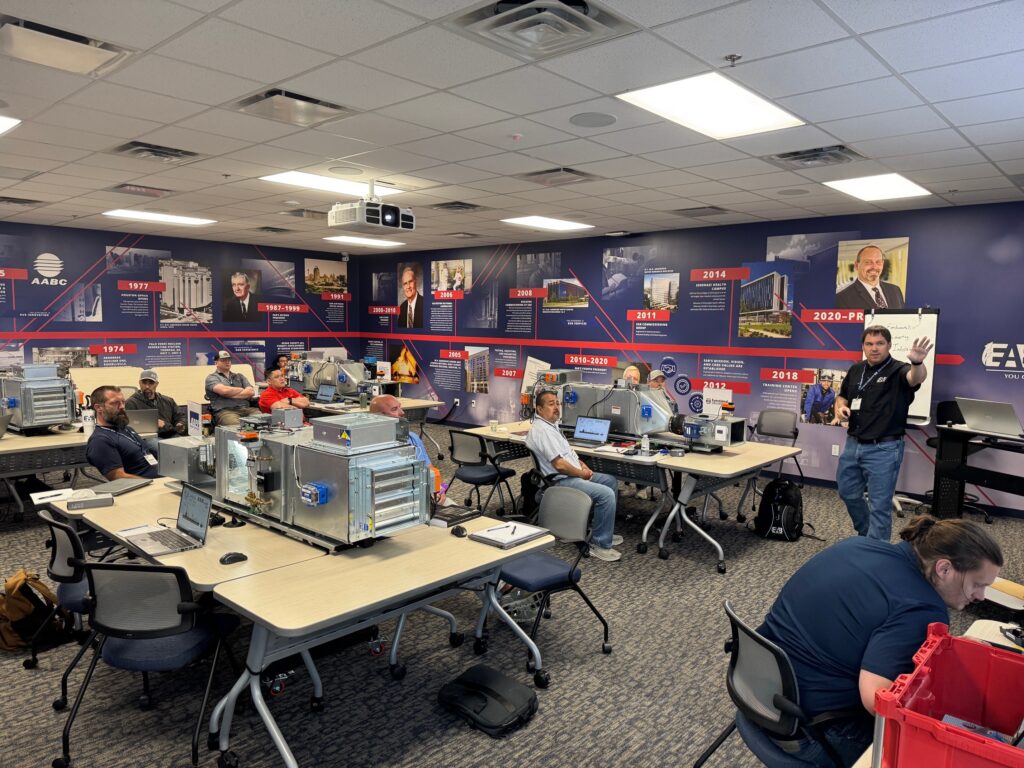
At the EAB Training Center, the Control Systems Verification course is designed to fill this exact gap.
The goal is simple: give professionals the practical skills needed to verify HVAC control systems as part of the Total System Balancing process.
But this isn’t just theory.
At EAB training we work through real-world scenarios and learn how to evaluate the actual behavior of HVAC systems found in commercial and institutional buildings.
That means learning how to answer questions like:
- Is the control sequence doing what the design intended?
- Are sensors located where they should be?
- Are VAV boxes responding correctly to load changes?
- Is the static pressure control stable?
- Are control valves behaving properly?
These are the issues that often separate a system that passes testing from a system that actually performs.
Why TAB Professionals Should Care
For TAB professionals, control verification is becoming essential.
Balancing airflow and water flow is only part of the story. If the controls are not operating correctly, the numbers you measure today may not hold tomorrow.
Understanding control systems allows TAB technicians to:
- Identify system instability
- Diagnose performance problems faster
- Work more effectively with controls contractors
- Deliver more reliable results to owners
Simply put, it makes a good technician a much stronger system diagnostician.
Why Commissioning Providers Should Care
Commissioning professionals already know how important sequences and system behavior are.
But understanding how systems are actually measured, adjusted, and stabilized in the field creates a huge advantage.
This course helps commissioning providers:
- Better understand TAB processes
- Verify control sequences in real equipment
- Identify control-related issues during testing
- Improve functional performance testing outcomes
When commissioning and TAB professionals both understand control verification, the entire project team benefits.
Learning It the Right Way
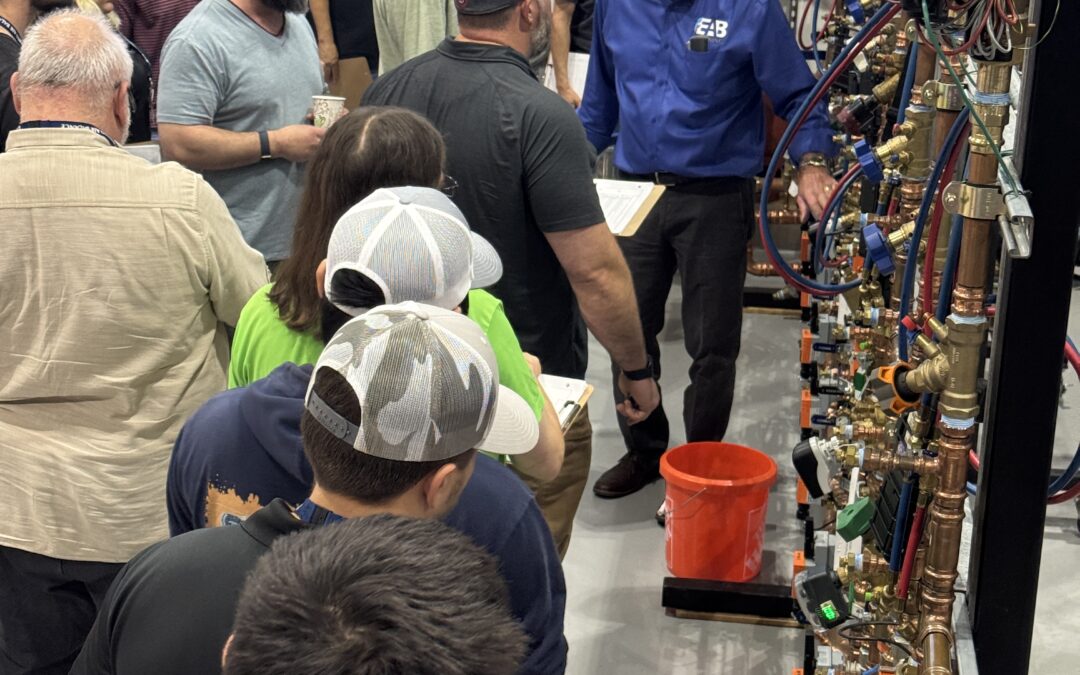
Like all EAB Training courses, Control Systems Verification blends classroom instruction with hands-on learning.
We are not just reading sequences.
We are observing system behavior, evaluating control responses, and learning how real HVAC systems should operate.
This approach builds confidence and practical troubleshooting ability that professionals can apply immediately on projects.
The Professionals Who Stand Out
The HVAC industry is changing.
Buildings are becoming smarter.
Systems are becoming more complex.
Controls are becoming more sophisticated.
The professionals who will stand out are the ones who understand both the mechanical systems and the control logic that drives them.
That’s exactly what this course is designed to develop.
The Bottom Line
If you’ve ever been on a project where:
- The numbers looked correct
- The systems were balanced
- But the building still didn’t work
…then you already understand why this training matters.
Control systems verification is one of the most valuable technical skills a TAB professional or commissioning provider can develop.
And it might just be the difference between a building that passes testing and one that actually performs.
Learn more about the course:
https://www.eabtraining.com/control-systems-verification/