
This biological safety cabinet training course provides essential knowledge and hands-on training to perform field certification tests on biosafety cabinets according to NSF/ANSI 49 standards. Participants learn BSC components and operation, installation and cleaning procedures, airflow dynamics, documentation requirements, and safety best practices. The course includes training on primary NSF tests such as downflow and inflow velocity, HEPA filter leak, airflow pattern, and site installation assessments, along with completed test reports, including B2 cabinet testing.
This biosafety cabinet certification course is ideal for field certifiers, lab safety professionals, HVAC/TAB technicians in controlled environments, facility engineers, industrial hygienists, and those pursuing NSF/ANSI 49 certification. Advanced topics, such as BSC decontamination and detailed Type B2 airflow calculations, are introduced here but covered in depth in the Advanced Certification course.
Recommendations: None | Classroom Instruction Time: 15 Hours | Hands-On Instruction Time: 15 Hours | eLearning: Online LMS Resources for six months | CE Credits: 4 credits
What's Included in the Course?
-
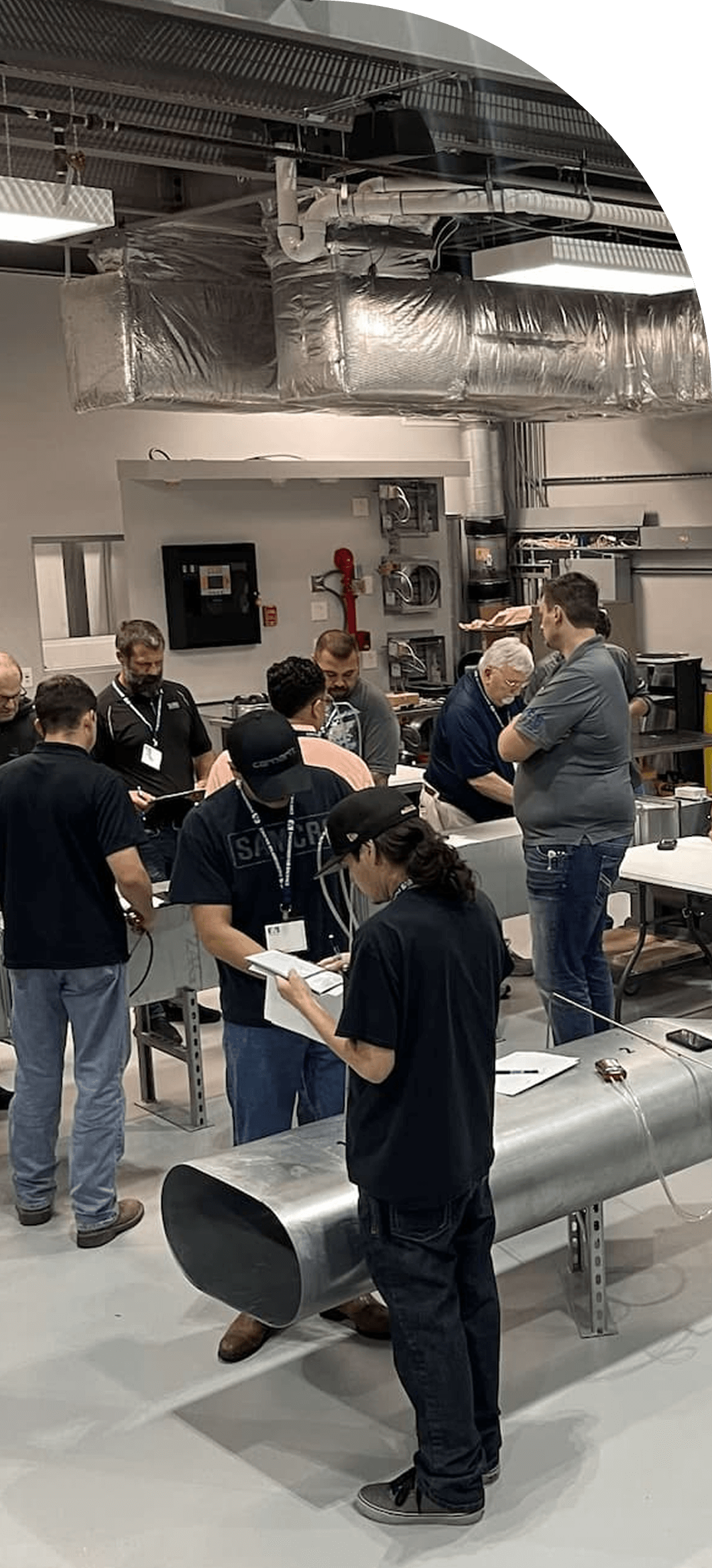
 4 days of instruction and hands-on activities
-
Resource Materials:
- EAB Training provides the current version of the NSF/ANSI 49 Biosafety Cabinetry: Design, Construction, Performance, and Field Certification Standard
- EAB Training provides a version of the NSF International Policies for the Enhanced and Basic Accreditation Programs for Biological Cabinet Field Certifiers manual
- LMS Access: Students retain access to the LMS and all course materials for 6 months following course completion.
-
Use of NSF required instruments
-
Completion certificate and NSF continuing education credits
What Should I Bring to EAB Training?
-
Computer or tablet with internet capabilities to access the EAB Learning Management System (LMS).
-
Calculator
What About Meals and Snacks?
Breakfast, lunch, and snacks will be included for EAB Training Students. Please let us know if you have any dietary restrictions.
Biological Safety Cabinet Certification Fundamentals Course
- Fundamentals of BSC components and operation
- Discuss the purpose and function of various types of BSCs and HEPA filters
- Proper BSC Install, Setup, Cleaning and Disinfecting
- Documenting certification reports in compliance with NSF/ANSI 49 standards
- Performing measurements and calculations
- Understanding airflow dynamics and critical performance criteria for BSC certification
- Applying safety and regulatory best practices for laboratory environments
- BSC Design and Construction
- BSC Lifespan and Decommissioning process
- Instructional and practical training on the following NSF Primary Tests:
- Downflow Velocity Test
- Inflow Velocity Test – DIM Method
- Inflow Velocity Test – Constricted Access Opening Method
- HEPA Filter Leak Test – Type A Cabinet (Scan Method)
- Exhaust HEPA Filter Leak Test – Type B Cabinet (Probe Method)
- Airflow Pattern Test
- Overview discussion on the following NSF Secondary Tests:
- Vibration Test
- Lighting Intensity Test
- Noise Level Test
Calculating Inflow/Downflow Velocity From Volume – Type B2 Cabinet is introduced in the BSC Fundamentals course; however, the actual practice is offered in the EAB Training NSF/ANSI 49 Biological Safety Cabinet Field Certifier Advanced Training course.
BSC Decontamination is referenced but not explored, in depth, in the BSC Fundamentals course. Due to its complexities, this is considered a more advanced skill. The BSC Decontamination instruction and practical are offered in the EAB Training NSF/ANSI 49 Biological Safety Cabinet Field Certifier Advanced Training course.
- Field certification professionals
- Laboratory safety and compliance personnel
- HVAC and TAB professionals working in controlled environments
- Industrial hygiene professionals
- Architects and Design Engineers
- Professionals that utilize BSCs
- Equipment Manufacturers
- Facility Engineers and Managers
- Those pursuing NSF/ANSI 49 certification
- BioSafety and EHS Professionals
Classroom Instruction Time: 15 Hours
Hands-On Instruction Time: 15 Hours
eLearning: Online LMS Resources for six months
CE Credits: 4 credits
Course Date:
September 21, 2027 – September 30, 2027

Daily Agenda
Primary Reports that make a BSC Certification:
- Downflow Velocity Test
- Inflow Velocity Test, Dim Method and/or Constricted Access Opening Method
- HEPA Filter Leak Test Type A Cabinet and/or Exhaust HEPA Filter Leak Test Type B Cabinet
- Site Installation Assessment Test
- Airflow Smoke Pattern Test
- Vibration Test
- Lighting Test
- Noise Level Test
Day One
Welcome Slide Deck
Introduction to BSCs, NSF 49, BSLs, BSC Classifications and Airflow Patterns
BSC Design, Construction, HEPA Filters, Memorandums
BSC Best Use, Practices, and Procedures
Proper BSC Install and Setup
Startup Procedure for a New BSC
Cleaning and disinfection of the BSC total work area
BSC Relocation
Day 1 Wrap-up and Q&A Session
Day Two
Instruments and Apparatuses
Hands-On Activity: Discover Instruments and Apparatuses
BSC Airflow Smoke Patterns
Hands-On Activity: Measure BSC Dimensions & Airflow Smoke Pattern Tests Practice
Hands-On Activities: Downflow Velocity Test & Inflow Velocity Test DIM Method Practice
Airflow Measurements – Airflow Calculations
Day 2 Wrap-up and Q&A Session
Day Three
BSC Exhaust Flow Measurements & Concurrent Balance Values (CBV)
Measure Filter Load
Hands-On Activities: Exhaust Flow Measurements, CBV, Filter Load Practice
BSC Airflow Monitor, Blower Interlocks, and Site Installation Assessment Test
Hands-On Activities: Site Installation Assessment Test Practice
Hands-On: HEPA Filter Leak Test – Scan Method – Type A & Probe Method – Type B Practice
BSC Certification Reporting
Secondary Testing Documentation
BSC Lifespan Decommissioning
Day 3 Wrap-up and Q&A Session
Day Four
Hands-On Activities: BSC Certification and Reporting
QA Review for BSC Reports
Q&A Review for BSC Reports
Day 4 Wrap-up and Q&A Session – Course Complete