NSF/ANSI 49 Biological Safety Cabinet Field Certifier Advanced Training Course

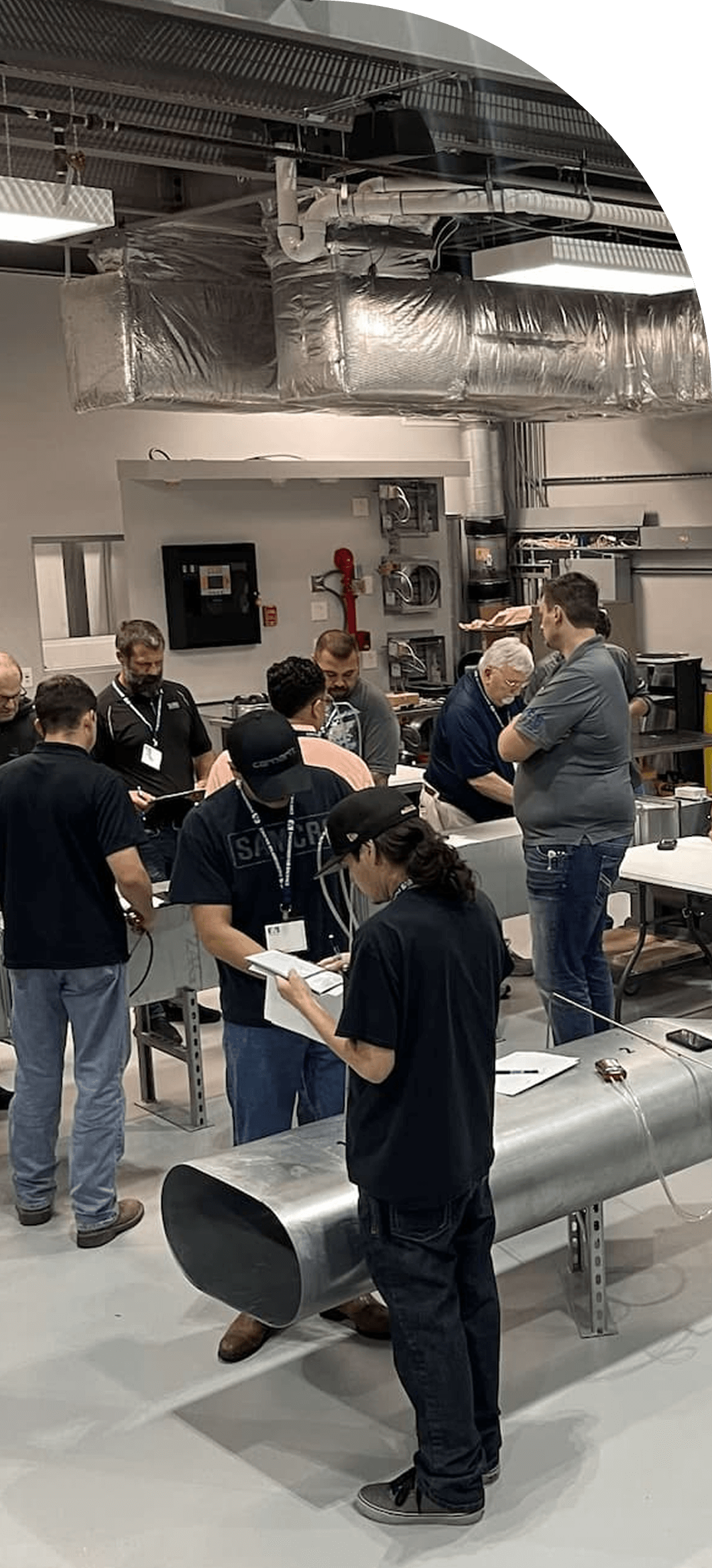
This course provides comprehensive, hands-on instruction aligned with industry standards to prepare participants for the NSF 49 written and practical exams. The course offers in-depth training on BSC design, construction, functions, installation requirements, and safe operation practices.
Participants perform advanced certification procedures through practical exercises such as site assessments and airflow testing. Training includes all major NSF primary and secondary tests, including inflow and downflow velocity testing, airflow pattern testing, HEPA filter leak testing, vibration, lighting, noise level tests, and mock gas decontamination. Calculating airflow for Type B2 cabinets is also covered.
What's Included in the Course?
-
 5 Days of Instruction and 2 Days of Testing
-
Resource Materials:
- EAB Training provides the current version of the NSF/ANSI 49 Biosafety Cabinetry: Design, Construction, Performance, and Field Certification Standard
- EAB Training provides a version of the NSF Policies for the Enhanced Accreditation Programs.
- EAB Training Course Workbook and Materials
- Access to the online EAB Learning Management System (LMS) for six months
- Completion certificate and NSF continuing education credits
-
Instrumentation Instruction
-
Breakfast and Lunch on Instructional Days
What Should I Bring to EAB Training?
-
Computer or tablet with internet capabilities to access the EAB Learning Management System (LMS).
-
A calculator that is not on a computer, tablet, or smart device.
-
Your personal copy of the NSF/ANSI 49 Biosafety Cabinetry: Design, Construction, Performance, and Field Certification Standard if you have one.
What About Meals and Snacks?
Breakfast, lunch, and snacks are included Monday – Friday for EAB Training Students. Please let us know if you have any dietary restrictions by emailing training@eabcoinc.com.

NSF/ANSI 49 Biological Safety Cabinet Field Certifier Advanced Training
- Overview of Biological Safety Cabinets
- Introduction to Data Sheets and Certification
- Instructional and practical training on the following:
- Downflow Velocity Test
- Inflow Velocity Test – DIM Method
- Inflow Velocity Test – Constricted Access Opening Method
- Calculating Inflow/Downflow Velocity from Volume – Type B2 Cabinet
- HEPA Filter Leak Test – Type A Cabinet (Scan Method)
- Exhaust HEPA Filter Leak Test – Type B Cabinet (Probe Method)
- Vibration Test
- Lighting Intensity Test
- Noise Level Test
- Site Installation Assessment Test
- Airflow Pattern Test
- Cabinet Gas Decontamination (Mock)
Classroom Instruction Time: 15 Hours
Hands-On Instruction Time: 15 Hours
eLearning: Online LMS Resources for six months
NSF CE Credits: 5 credits
Examination Time: Determined by the NSF proctor
April 6, 2026 – April 12, 2026
October 19, 2026 – October 25, 2026
Daily Agenda
Agenda based on the NSF 49 Workflow Order of Operations
- Downflow velocity
- Inflow velocity (primary, direct inflow measurement)
- Inflow velocity (secondary constricted access)
- Calculating downflow/inflow velocity from volume (Type B2)
- HEPA filter leak scan
- HEPA filter leak gross probe
- Site installation assessment
- Smoke patterns
- Lighting intensity
- Vibration test
- Noise level test
- Decontamination test
Day One
Welcome Slide Deck and Introductions
NSF 49 Introduction
BSC Cabinet Classification Types and Airflow Patterns
Biological Safety Levels (BSL) Overview
HEPA filter types
Design, Construction, and Memorandums
Sample NSF Data Sheet Overview
Common Failure Scenario Introduction
Instrumentation and Equipment Overview
Apparatus Testing Equipment and Calibration Overview
Laboratory Area Tour
Downflow Velocity Test – Lab Practice Practical
Inflow Velocity Test (DIM Method) – Discussion and Data Sheet Detail
Inflow Velocity Test (DIM Method) – Lab Practice Practical
Inflow Velocity Test (Constricted Method) – Discussion and Data Sheet Detail
Inflow Velocity Test (Constricted Method) – Lab Practice Practical
Day 1 Wrap-up and Q&A Session
Day Two
Calculating Downflow / Inflow Velocity From Volume (Type B2)-Discussion and Data Sheet Detail
Calculating Downflow / Inflow Velocity From Volume (Type B2) – Lab Practice Practical
HEPA Filter Leak Test – Type A (Scan Method) – Discussion and Data Sheet Detail
HEPA Filter Leak Test – Type A (Scan Method)
Exhaust HEPA Filter Leak Test – Type B (Probe Method)
Site Installation Assessment Test – Discussion and Data Sheet Detail
Site Installation Assessment Test – Lab Practice Practical
Airflow Smoke Pattern Testing – Discussion and Data Sheet Detail
Airflow Smoke Pattern Testing – Lab Practice Practical
Day 2 Wrap-up and Q&A Session
Day Three
Light Intensity Test – Discussion and Data Sheet Detail
Light Intensity Test – Lab Practice Practical
Vibration Testing – Discussion and Data Sheet Detail
Vibration Testing – Lab Practice Practical
Noise Level Testing – Discussion and Data Sheet Detail
Noise Level Testing – Lab Practice Practical
Decontamination Procedures – Mock Lab Practice Practical
Day Four
Mock Practical Exams (Lunch will be provided)
1. Downflow Velocity
2. Inflow Velocity Test – DIM Method
3. Inflow Velocity Test – Constricted Method
4. Calculating Downflow / Inflow velocity From Volume (Type B2)
5. HEPA Filter Leak Test – Scan Method (Type A)
6. Exhaust HEPA Filter Leak Test – Probe Method
7. Site Installation Assessment Test
8. Airflow Smoke Patterns Test
9. Lighting Intensity Test
10. Vibration Test
11. Noise Level Test
Day 4 Wrap-up and Q&A Session
Day Five
Review for Next Day NSF Proctored Practical Exam & Exit Surveys
Day Six
Group 1 NSF Proctored Practical Exam (If applicable)
Day 6 Wrap-up and Clean-up
Day Seven
Group 1 NSF Proctored Practical Exam (If applicable)
Day 7 Wrap-up and Clean-up